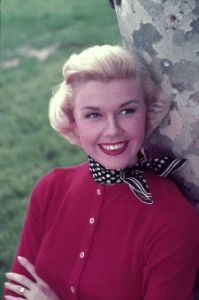
During the Golden Age of Hollywood, a majority of stars boasted the ability to do more than simply act for the camera. A perfect example of this can be found in the legendary Doris Day. While she is known for being a singer and actress whose career spanned more than seven decades, Day also had a history of being a dedicated activist. Her altruism included being a passionate believer in the ethical treatment of animals as well as a registered minister of the Universal Life Church. Explore these details to learn more about Day’s long and illustrious life.
Dreaming of Becoming a Dancer
Doris Day was born Doris Mary Kappelhoff in Cincinnati, Ohio. She discovered a love of dance at an early age and set her sights on becoming a professional dancer. As an adolescent, she entered a number of dance competitions around the country with her good friend Jerry Doherty. Unfortunately, her dreams would be severely disrupted when she was a teenager. In 1937, she was in a car accident that caused her to break her leg. Though a major setback to her career, the accident would introduce Day to new options for her future.
Finding a New Calling
According to Day, she spent most of her time recovering from her accident listening to the radio. While hanging around in bed, she would sing along with the music and discovered that she had a better singing voice than she’d realized. Her mother arranged for her to take singing lessons, which led to Day landing several radio jobs. She was discovered by orchestra leader Barney Rapp in 1939, who encouraged her to switch her name from Kappelhoff to Day so that it could easily fit on a marquee.
Making Her Way to the Silver Screen
Throughout the 1940s, Day would release dozens of songs that became instantly popular with American audiences. Though she had no acting experience, she was approached by Hollywood directors in 1948 to appear in the film “Romance on the High Seas.” Day’s natural talent as a performer in the movie helped officially launch her career as an actress. Notable films she starred in during the 1950s included “On Moonlight Bay,” “Calamity Jane,” and “Love Me or Leave Me.” One of her biggest roles came in 1956 when she appeared in Alfred Hitchcock’s “The Man Who Knew Too Much.”
Enduring a Shift in Cultural Tastes
Day’s star continued to rise into the 1960s when she would star in romantic comedies such as “Pillow Talk,” “Please Don’t Eat the Daisies,” and “That Touch of Mink.” She would go on to star in “The Doris Day Show,” a television series that ran on CBS from 1968 until 1973. Public tastes changed in the 1970s, and Day’s persona became viewed as outdated. Though she stopped appearing in films at this time, she would continue to host television specials throughout the 1980s. Day also continued to sing and produce albums, with her final release coming out in 2011.
Dedicating Her Life to Animal Advocacy
Over the course of her career, Day was an outspoken advocate of animal welfare. After witnessing how animals were treated on the set of “The Man Who Knew Too Much,” she began pushing for better conditions for the fauna used in Hollywood productions. Day would found the Doris Day Animal Foundation in 1978, which continues to operate after her death in 2019. The charity raised over $3 million in 2020 by auctioning off a number of Day’s personal possessions. Day is also a registered minister of the Universal Life Church, though there are no records available of marriages she officiated.
Remembering a Hollywood Legend
Though her dreams of becoming a dancer were dashed by a sudden car accident, Doris Day would prevail by becoming one of the most prolific actresses and singers of the 20th century. From her career as a performer to her charitable acts, Day continues to act as an inspiration long after her passing.